Yeshiva University








Skip past mobile menu to footer


YU News
Latest News
Featured News
Eliana Waghalter (SCW '28) reflects on her summer internship at Deracheha. What were the main tasks you undertook during your internship or fellowship? During my internship at Deracheha, I undertook three main tasks, two of which were focused on developing the content that was already on the ...
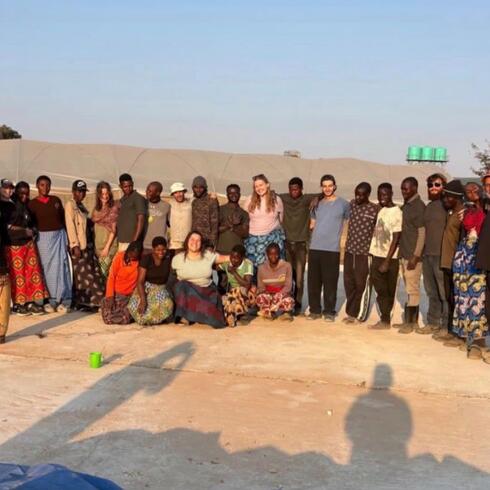
Chloe Baker (SCW '26) reflects on her experience in Tevel b’Tzedek’s Service Learning Cohort in Zambia. What were the main tasks you undertook during your internship or fellowship? During my time as a participant in Tevel b’Tzedek’s Service Learning Cohort in rural Zambia, my work fell into two…
Rebecca Peykar (SCW '28) reflects on her summer internship at The Diplomatic Institute. Over the Summer of 2026, I had the wonderful opportunity of being an intern at The Diplomatic Institute, in which I worked closely with my boss Gabriel Haayon to facilitate partnerships with businesses and ...
Matthew Minsk (YC '26) reflects on his summer internship at the Institute for Family Studies. What were the main tasks you undertook during your internship or fellowship? I was a research intern at the Institute for Family Studies. My main task was data—I ran cross tabs on a recent survey conducted…
Kayla Kramer (SCW '26) reflects on her judicial internship with Judge Scott Dunn at the Civil Supreme Court of Queens County. What were the main tasks you undertook during your internship or fellowship? During my time as a Judicial Intern in the chambers of the Honorable Judge Dunn at the Civil ...
Jared Kinches (YC '27) reflects on his summer internships with Congresswoman Elise Stefanik (NY-21) and Congressman Andrew Garbarino (NY-02). This past summer I had the great honor of spending three months in our nation’s Capitol interning first with Congresswoman Elise Stefanik (NY-21) and then ...
Gavriel Buchwald (YC '26) reflects on his summer internship with Lord Andrew Roberts. What were the main tasks you undertook during your internship or fellowship? During my internship with Lord Andrew Roberts, I worked as a historical research assistant on his book Expulsion and Its Consequences ...
Judah Rockoff (YC '26) reflects on his internship with Justice Rachel Freier in the Kings County Supreme Court. What were the main tasks you undertook during your internship or fellowship? During my internship with Justice Rachel “Ruchie” Freier in the Kings County Supreme Court, my primary ...
News that YU Alumni can use about Benefits & Services, Career Support, Events, News, Networking and Making a Gift.