


Ken
Critchfield, Ph.D.
Professor, Program Director of the Clinical PsyD program
Rm 332, Rousso Building
1165 Morris Park Avenue
Rousso Building
Bronx, NY 10461
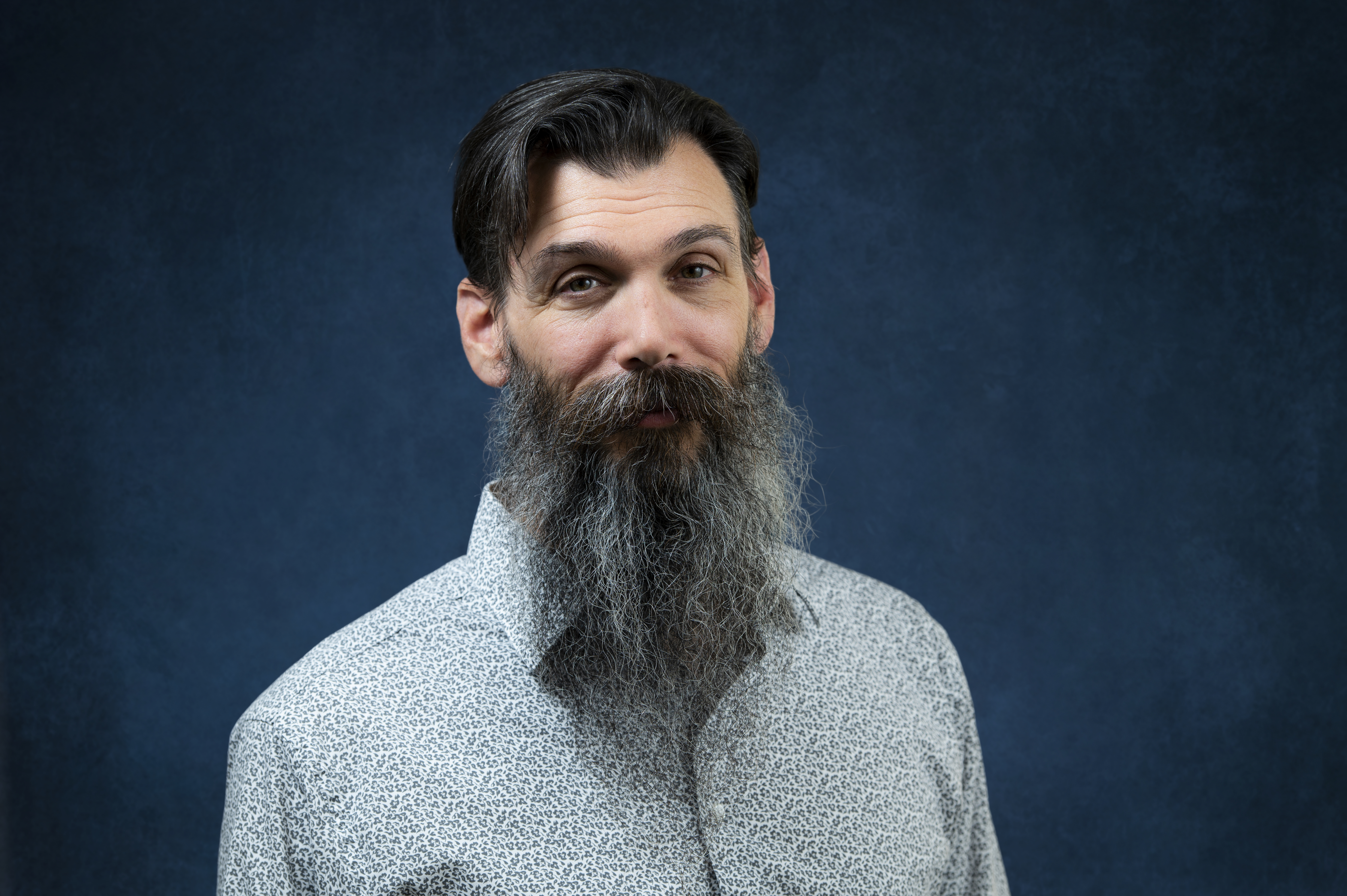
Dr. Ken Critchfield is a tenured Professor and Program Director of the Clinical Psychology Program of the Ferkauf Graduate School of Psychology. Dr. Critchfield’s research, teaching and clinical work all emphasize interpersonal and attachment-based principles of change implemented in Interpersonal Reconstructive Therapy (IRT: Benjamin, 2003; 2018). IRT is an integrative, psychosocial treatment that uses an attachment-based case formulation to tailor treatment for patients having severe and chronic problems characterized comorbid depression, anxiety, PTSD, bipolar disorder, and/or chronic suicidality, often accompanied by personality disorder. Dr. Critchfield earned his Ph.D. in clinical psychology from the University of Utah in 2002, with an internship at the San Francisco VA Medical Center, and post-doctoral training at Weill-Cornell Medical College. He was co-director of the IRT clinic at the University of Utah Neuropsychiatric Institute and directed the Combined-Integrated Clinical and School Psychology program at James Madison University from 2017-2021. Dr. Critchfield is a Fellow of APA’s Society for Advancement of Psychotherapy (Div. 29). He has held leadership roles with the Society for Exploration of Psychotherapy Integration (SEPI), and has long been a member of the Society for Psychotherapy Research (SPR). Starting in 2026 he is a member of the APA Advisory Steering Committee for Clinical Practice Guideline Development.
Email:
- Psychotherapy Process and Outcome
- Interpersonal and Attachment-based Conceptualizations of Psychopathology and Treatment
- Psychotherapy Integration
- Case Formulation
- Personality Disorder
- Structural Analysis of Social Behavior
- Interpersonal Reconstructive Therapy
- APA Fellow: Division 29, Society for the Advancement of Psychotherapy.
- Fellow, Society for the Exploration of Psychotherapy Integration
- Critchfield, K. L., Ball, C., Gornish, A., Rose N. L. J., Goldman, H. R., Harrison, E. G., & Mackaronis, J. E. (in press, expected Dec 2026). Structural Analysis of Social Behavior (SASB) Interpersonal Gestalt Coding. In H. Westra, C. Eubanks, & T. Boritz (Eds.), Developing Process Sensitivity: A Transtheoretical Path to Improving Psychotherapy Training and Clinical Outcomes. APA Press.
- Panizo, M. T., Harrison, E. G., & Critchfield, K. L. (2026). Interpersonal Diagnosis of Personality Disorders: Explaining Comorbidity and Enhancing Clinical Relevance. Journal of Psychotherapy Integration, 36(1), 60-76.https://doi.org/10.1037/int0000370
- Critchfield, K. L., Gornish, A., Epstein, L., Mackaronis, J. E., & Benjamin, L. S. (2025). The “gift of love” as a candidate mechanism of psychopathology and change in interpersonal reconstructive therapy for patients with high-acuity clinical needs. Psychotherapy, 62(3), 280–291. https://doi.org/10.1037/pst0000556
- Critchfield, K. L., & Benjamin, L. S. (2024). Structural Analysis of Social Behavior (SASB): A Primer for Clinicians. APA Press.
- Woehrle, P. L., Critchfield, K. L., Anolik, S., Bobal, C., Pempek, T. A., & Skowron, E. A. (2022). Multigenerational patterns of parenting-at-risk: A test of interpersonal specificity using copy process theory. Journal of Clinical Psychology, 10.1002/jclp.23412. Advance online publication.https://doi.org/10.1002/jclp.23412
- Harvell-Bowman, L.A., Critchfield, K.L., Ndzana, J. F., Stucker, E., I., Yocca, C., Wilgus, K., Hurst, A., & Sullivan, K. (2022). Of Love and Death: Death anxiety, attachment, and suicide as experienced by college students. OMEGA – Journal of Death and Dying. Advance online publication. https://doi.org/10.1177/00302228221100636
- Critchfield, K. L., Mackaronis, J. E., Thapa, P., & Cechak, P. (2022). A brief overview of safety planning in interpersonal reconstructive therapy. Psychotherapy, 59(2), 168–173. https://doi.org/10.1037/pst0000415
- Critchfield, K. L., Thapa, P., Panizo, M. T., & Conceição, N. (2022). Using interpersonal reconstructive therapy to address comorbid problems organized by attachment-based learning: The case of Don. Journal of Clinical Psychology, 78, 396– 408. https://doi.org/10.1002/jclp.23292
- Critchfield, K. L., Dobner-Pereira, J., Stucker, E. I., (2021). The Case of Sharon Considered form the Vantage Point of Interpersonal Reconstructive Therapy. Pragmatic Case Studies in Psychotherapy, 17(1), 42-62. http://pcsp.libraries.rutgers.edu
- Critchfield, K. L., Panizo, M. T., & Benjamin, L. S., (2019). Formulating key psychosocial mechanisms of psychopathology and change in Interpersonal Reconstructive Therapy. In U. Kramer (Ed.) Case Formulation for Personality Disorders: Tailoring Psychotherapy to the Individual Client. Elsevier. (pp. 181-201).
- Critchfield, K. L., Mackaronis, J. E., & Benjamin, L. S. (2017). Integrative use of CBT and Psychodynamic techniques in Interpersonal Reconstructive Therapy. Journal of Psychotherapy Integration, 27(4), 460-475. http://dx.doi.org/10.1037/int0000092
- Critchfield, K. L., Benjamin, L. S., & Levenick, K. (2015). Reliability, sensitivity, and specificity of case formulations for comorbid profiles in Interpersonal Reconstructive Therapy: addressing mechanisms of psychopathology. Journal of Personality Disorders, 29(4), 547-573. doi: http://dx.doi.org/10.1521/pedi.2015.29.4.547
- Critchfield, K. L., & Benjamin, L. S. (2010). Assessment of repeated relational patterns for individual cases using the SASB-based Intrex questionnaire. Journal of Personality Assessment, 92(6), 480-489. doi: http://dx.doi.org/10.1080/00223891.2010.513286
- Critchfield, K. L., Clarkin, J. F., Levy, K. N., & Kernberg, O. K. (2008). Organization of co-occurring Axis II features in BPD. British Journal of Clinical Psychology. 47(2), 185-200. [Selected for Faculty of 1000 Medicine, October 2008]
- Critchfield, K. L., & Benjamin, L. S. (2008). Internalized representations of early interpersonal experience and adult relationships: A test of copy process theory in clinical and non-clinical settings. Psychiatry: Interpersonal and Biological Processes, 71(1), 71-92. http://dx.doi.org/10.1521/psyc.2008.71.1.71. [reprinted in Ecologia della Mente, Vol 34(2), Dec 2011, 182-211.]
- Critchfield, K. L., Levy, K. N., Clarkin, J. F., & Kernberg, O. F. (2008). The relational context of aggression in BPD: Using adult attachment style to predict forms of hostility. Journal of Clinical Psychology, 64(1), 67-82.
- Critchfield, K. L., Henry, W. P., Castonguay, L. G., & Borkovec, T. D. (2007). Interpersonal process and outcome in variants of cognitive-behavioral psychotherapy. Journal of Clinical Psychology, 63(1), 31-51.
- Critchfield, K. L., & Benjamin, L. S. (2006). Principles for psychosocial treatment of personality disorder: Summary of the Division 12 Task Force review. Journal of Clinical Psychology, 62(6), 661-674.
- Benjamin, L. S., Rothweiler, J. C., & Critchfield, K. L. (2006). The use of Structural Analysis of Social Behavior (SASB) as an assessment tool. Annual Review of Clinical Psychology, 2, 83-109.
Rm 332, Rousso Building
1165 Morris Park Avenue
Rousso Building
Bronx, NY 10461