Oct 25, 2019 By: yunews
Enjoy the stimulating and engaging work being done by these Yeshiva University faculty across the campuses.
Dr. Shalom Holtz Dr. Paula Geyh Dr. Brian Trimboli Dr. David Lavinsky Dr. Rachel Mesch Dr. Lauren Fitzgerald Dr. David Puretz Dr. Edward Belbruno Dr. Daniel Beliavsky Dr. Jannine Lasaleta Dr. Lisa Chalik Dr. Joshua WaxmanDr. Shalom Holtz Writes a Brief for Prayer
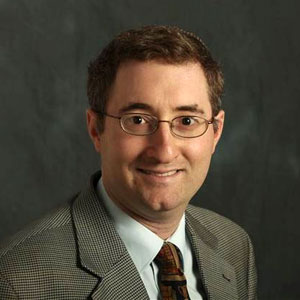 Dr. Shalom Holtz, professor of Bible at Yeshiva College and associate dean of academic affairs, has a new book coming out from Brown Judaic Studies. Titled Praying Legally, Dr. Holtz explained how “in the Hebrew Bible and related ancient sources prayer there is an opportunity to make one’s case before divine judges. Prayers were formulated using courtroom or trial language, including demands for judgment, confessions and accusations.” This use of legal language, he noted, “reveals ancient Near Eastern thoughts about what takes place when one prays.”
Dr. Holtz noted that “Praying Legally is a direct outgrowth of my earlier research on trial procedure attested in ancient Mesopotamian records. This book, and several other articles written along the way, draw out the connections between the language of earthly litigation and the ways humans address their petitions in the divine courtroom, through prayer. In the book, I emphasize how courtroom imagery in prayer allowed human speakers to ‘have their day in court’ and even question divine justice.”
Back to the top
Dr. Shalom Holtz, professor of Bible at Yeshiva College and associate dean of academic affairs, has a new book coming out from Brown Judaic Studies. Titled Praying Legally, Dr. Holtz explained how “in the Hebrew Bible and related ancient sources prayer there is an opportunity to make one’s case before divine judges. Prayers were formulated using courtroom or trial language, including demands for judgment, confessions and accusations.” This use of legal language, he noted, “reveals ancient Near Eastern thoughts about what takes place when one prays.”
Dr. Holtz noted that “Praying Legally is a direct outgrowth of my earlier research on trial procedure attested in ancient Mesopotamian records. This book, and several other articles written along the way, draw out the connections between the language of earthly litigation and the ways humans address their petitions in the divine courtroom, through prayer. In the book, I emphasize how courtroom imagery in prayer allowed human speakers to ‘have their day in court’ and even question divine justice.”
Back to the top
Dr. Paula Geyh Cross-Pollinates Philosophy and Literature
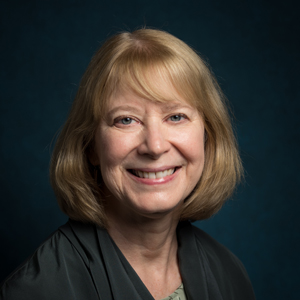 Dr. Paula Geyh, an associate professor of English at Yeshiva College, attended the annual Association for Philosophy and Literature, sponsored this year by the Alpen-Adria-Universität Klagenfurt in Austria. The conference brings together scholars from different disciplines to explore a range of philosophical and critical/theoretical issues. “This is a good conference for me because my research and scholarship tend to be very interdisciplinary,” said Dr. Geyh, including the disciplines of literature, history, philosophy and visual arts.
“The (very broad) theme this year was ‘Truth, Fiction, Illusion, Worlds and Experience,’” said Dr. Geyh, “and my paper was part of a panel entitled ‘Reality and the Postmodern.’” The paper, “Ishmael Reed’s Counterhistory: Evidence, Indeterminacy, and Narrative,” examined how Reed uses historical visual images and documents in his novel Mumbo Jumbo in a way that “compels readers to struggle with the suspect nature of historical evidence and question the reliability of the conflicting historical narratives constructed through it.”
The conference gave Dr. Geyh a chance “to present and exchange ideas with other scholars with similarly interdisciplinary interests and get feedback on work-in-progress; I learned a lot.”
Below is the text of her paper proposal.
* * * * *
Ishmael Reed’s Mumbo Jumbo (1972), a rewriting of American history from an African-American viewpoint, was one of the first postmodern historiographic metafictions. Reed’s text is both a critique of received history and a counterhistory that reimagines American history as an epic struggle pitting the repressive forces of monotheistic Atonism, the “white-washed” history of the U.S. and its white-dominated power structures, against the polytheistic, African-born creative spirit of “Jes Grew” and the Harlem Renaissance it inspires.
To create this counterhistory, Reed mixes reproductions of authentic documents, news clippings, and photographs, all potentially functioning as historical “evidence,” with apparently invented ones. A few, like a Cotton Club program, are easily identifiable or, like the photograph of Duke Ellington’s orchestra, glossed in the text. In other cases, such as the uncaptioned photograph of a 1960s Black Panthers march that is embedded in a discussion of a 1920s plot against Jes Grew, readers must deduce (or create) the connection. The identity of many other images, however, remains obscure, as does their relation to the narrative. Reed puts the reader in the position of a historian who attempts to identify artifacts from the past and decide on their interpretation, while contending with conflicting or incommensurable evidence and the impossibility of creating a cohesive history from it all.
This paper examines how the text’s unidentified images compel readers to struggle with the suspect nature of historical evidence and question the reliability of the conflicting historical narratives constructed through it, thus making us confront the indeterminacy—and multiplicity—of history. As a result, there emerges not only a radical questioning of conventional historiographies and the suggestion of alternative ones, but a literary critique of our concepts of history and of the nature of historical truth. A new literary practice requires a new philosophy of history.
Back to the top
Dr. Paula Geyh, an associate professor of English at Yeshiva College, attended the annual Association for Philosophy and Literature, sponsored this year by the Alpen-Adria-Universität Klagenfurt in Austria. The conference brings together scholars from different disciplines to explore a range of philosophical and critical/theoretical issues. “This is a good conference for me because my research and scholarship tend to be very interdisciplinary,” said Dr. Geyh, including the disciplines of literature, history, philosophy and visual arts.
“The (very broad) theme this year was ‘Truth, Fiction, Illusion, Worlds and Experience,’” said Dr. Geyh, “and my paper was part of a panel entitled ‘Reality and the Postmodern.’” The paper, “Ishmael Reed’s Counterhistory: Evidence, Indeterminacy, and Narrative,” examined how Reed uses historical visual images and documents in his novel Mumbo Jumbo in a way that “compels readers to struggle with the suspect nature of historical evidence and question the reliability of the conflicting historical narratives constructed through it.”
The conference gave Dr. Geyh a chance “to present and exchange ideas with other scholars with similarly interdisciplinary interests and get feedback on work-in-progress; I learned a lot.”
Below is the text of her paper proposal.
* * * * *
Ishmael Reed’s Mumbo Jumbo (1972), a rewriting of American history from an African-American viewpoint, was one of the first postmodern historiographic metafictions. Reed’s text is both a critique of received history and a counterhistory that reimagines American history as an epic struggle pitting the repressive forces of monotheistic Atonism, the “white-washed” history of the U.S. and its white-dominated power structures, against the polytheistic, African-born creative spirit of “Jes Grew” and the Harlem Renaissance it inspires.
To create this counterhistory, Reed mixes reproductions of authentic documents, news clippings, and photographs, all potentially functioning as historical “evidence,” with apparently invented ones. A few, like a Cotton Club program, are easily identifiable or, like the photograph of Duke Ellington’s orchestra, glossed in the text. In other cases, such as the uncaptioned photograph of a 1960s Black Panthers march that is embedded in a discussion of a 1920s plot against Jes Grew, readers must deduce (or create) the connection. The identity of many other images, however, remains obscure, as does their relation to the narrative. Reed puts the reader in the position of a historian who attempts to identify artifacts from the past and decide on their interpretation, while contending with conflicting or incommensurable evidence and the impossibility of creating a cohesive history from it all.
This paper examines how the text’s unidentified images compel readers to struggle with the suspect nature of historical evidence and question the reliability of the conflicting historical narratives constructed through it, thus making us confront the indeterminacy—and multiplicity—of history. As a result, there emerges not only a radical questioning of conventional historiographies and the suggestion of alternative ones, but a literary critique of our concepts of history and of the nature of historical truth. A new literary practice requires a new philosophy of history.
Back to the top
Dr. Brian Trimboli Composes Sonnet Crowns
Dr. Brian Trimboli, currently a lecturer-in-writing at Yeshiva College, spent the summer working on a manuscript of “sonnet crowns.” This is a poetic form where a sequence of sonnets are linked together structurally by having the final line of the first sonnet be the first line of the second sonnet, the last line of the second sonnet be the first line of the third sonnet, and so on. The sequence ends with having the first line of the first sonnet become the final line of the final sonnet, bringing the sequence to a close. (For those readers who don’t quite remember what a sonnet is, catch up with a quick tutorial.) “Working on this manuscript,” he explained, “afforded me an opportunity to use the manuscript space as an echo chamber for some of the experiences I've gone through in my life. The fact that the crowns repeat lines gives the reader a sort of phantom feeling—they know that something sounds familiar, but from where? and why?—which I think helps the reader to feel included and attentive and rewarded for their reading. “It also gives me a highly controlled aspect to writing about experiences that were, for the most part, completely outside of my control. The poems allow me, and hopefully the reader, to process some of the more uncontrollable aspects of life and to regard that processing with rhythm and enjoyable sounds/language that makes the process of going through it somewhat dissonant, like listening to a beautifully sounding song that has harsh lyrics. “I'm always trying to get the reader to engage more than once with the work, and that's really hard when you're dealing with difficult emotional issues. Doing this work has became a way for me to lead the reader into discovering the subject matter after they've enjoyed engaging with it.” Read an example of his work published in the latest issue of PaperBag. Back to the topDr. David Lavinsky on Assassination and Sacred Truth
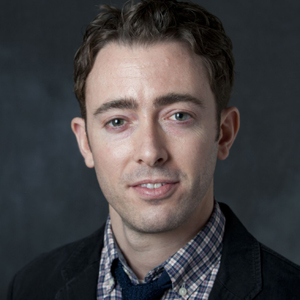 Dr. David Lavinsky, associate professor of English at Yeshiva College, gave a talk at the Biennial London Chaucer Conference, organized by the Institute of English Studies at the University of London, from June 28-29, 2019. The conference topic was “Chaucer and Europe,” and Dr. Lavinsky’s talk, “Chaucer, Machaut, and the European Periphery,” dealt with Chaucer's knowledge about the siege of Alexandria under Peter the I of Cyprus and Peter’s assassination in 1369. “The work for the conference paper,” he noted, “stemmed from preparing to teach a YU summer course on travel narratives (Frontiers and Borders: Travel Writing Through the Ages) that touched briefly on accounts of the crusade.”
Dr. Lavinsky also has a paper coming out in 2020 for a special issue of Mediaevalia that looks at a set of English gospel commentaries and translations from the late 14th/early 15th centuries. “The topic for the essay,” he explained, “came from my book, The Material Text in Wycliffite Biblical Scholarship: Inscription and Sacred Truth, published by Boydell in 2017. It considers a particular case in which an imprisoned preacher, William Thorpe, seems to have found the gospel commentaries and translations significant in defending himself during interrogation. It also touches upon some recent debates about the extent to which academic commentaries and other texts that we might consider ‘scholastic’ in nature circulated beyond learned audiences.”
Back to the top
Dr. David Lavinsky, associate professor of English at Yeshiva College, gave a talk at the Biennial London Chaucer Conference, organized by the Institute of English Studies at the University of London, from June 28-29, 2019. The conference topic was “Chaucer and Europe,” and Dr. Lavinsky’s talk, “Chaucer, Machaut, and the European Periphery,” dealt with Chaucer's knowledge about the siege of Alexandria under Peter the I of Cyprus and Peter’s assassination in 1369. “The work for the conference paper,” he noted, “stemmed from preparing to teach a YU summer course on travel narratives (Frontiers and Borders: Travel Writing Through the Ages) that touched briefly on accounts of the crusade.”
Dr. Lavinsky also has a paper coming out in 2020 for a special issue of Mediaevalia that looks at a set of English gospel commentaries and translations from the late 14th/early 15th centuries. “The topic for the essay,” he explained, “came from my book, The Material Text in Wycliffite Biblical Scholarship: Inscription and Sacred Truth, published by Boydell in 2017. It considers a particular case in which an imprisoned preacher, William Thorpe, seems to have found the gospel commentaries and translations significant in defending himself during interrogation. It also touches upon some recent debates about the extent to which academic commentaries and other texts that we might consider ‘scholastic’ in nature circulated beyond learned audiences.”
Back to the top
Dr. Rachel Mesch Makes a Case for Women Writers
Dr. Rachel Mesch, professor of English and French and chair of the English Department at Yeshiva College, presented at a conference from May 28-29, 2019, titled “Des Revues et des Femmes,” organized by the Sorbonne Université. The two-day colloquium explored the relationship between 20th-century women writers and the thriving literary press of that time. “The conference was an opportunity to reach French scholars who are only now beginning to consider gender studies in a serious way and who have in the past been less receptive to interdisciplinary work of the kind that I do, where I bring together visual and literary studies and historical approaches.” Her presentation, drawn from her book, Having it All in the Belle Epoque: How French Women’s Magazines Invented the Modern Woman, showed how two early 20th-century photographic women’s magazines, Femina and La Vie Heureuse, were influential in expanding women’s writing in the first decade of the twentieth century. “These magazines appeared to be ‘women's magazines’ in the pejorative sense of that expression, but in fact they modeled new forms of female achievement using all the technological innovations of the moment. For instance, they showed photographs of women doctors, lawyers, painters, actors, mountain climbers, explorers and, most of all, writers,” Dr. Mesch explained. “Women writers of the day were featured in glossy photo spreads and celebrated as role models. This resulted in an explosion of success for women writers, to the point that everyone was convinced that women were going to finally be allowed to become members of the Académie Française, the ultimate honor for a French writer. So even if these magazines weren’t part of what we normally think of as the ‘literary press’—academic journals that would review books primarily—these magazines created a different kind of literary press that should be recognized for its important work.” The presentation focused on a series of columns run in 1909 in which a prominent male writer, Fernand Vandérem, went so far as to imagine which women writers would be nominated to the Academy first and to write fictional “reception” speeches welcoming them, as was the custom on the inauguration of a member of the Académie. “I explored the nature of this strange and telling phenomenon and how it reflected the work of these two magazines in imagining equalities for women and a world in which they could be celebrated for intellectual achievements, even if that did not quite reflect the actual circumstances beyond their demographic. It’s a bit like how a TV show can imagine a female president that feels completely normal, even if we have not yet had one.” In the end, she pointed out, women were not accepted in the Academy until 1986. “And that's why it’s easy to forget about this moment. But my paper argued that we can best understand a culture and moment by considering its hopes and dreams, even if those hopes and dreams were never realized.” On another note, her book, Before Trans: Three Gender Stories from Nineteenth-Century France, is coming out in May 2020 from Stanford University Press. Back to the topDr. Lauren Fitzgerald on Stephen King and Plagiarism
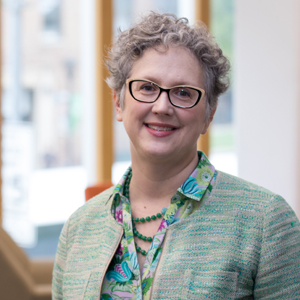 Dr. Lauren Fitzgerald, professor of English at Yeshiva College and director of the Wilf Campus Writing Center, presented at the 6th Annual Conference of the International Crime Fiction Association at the Università degli Studi “G. d’Annunzio” in Pescara, Italy, from June 12-15, 2019. Her paper, “Stephen King and the Crime of Plagiarism,” used the King novella Secret Window, Secret Garden to examine complex cultural attitudes about authors and plagiarists, particularly in educational settings.
“My PhD dissertation and early publications were on 18th- and 19th-century British Gothic novels, which have strong ties to the crime fiction tradition as well as to Stephen King, whom I’ve been reading for about 40 years. It was a great pleasure to link King to my other scholarly interests in writing studies through the subject of plagiarism.”
Back to the top
Dr. Lauren Fitzgerald, professor of English at Yeshiva College and director of the Wilf Campus Writing Center, presented at the 6th Annual Conference of the International Crime Fiction Association at the Università degli Studi “G. d’Annunzio” in Pescara, Italy, from June 12-15, 2019. Her paper, “Stephen King and the Crime of Plagiarism,” used the King novella Secret Window, Secret Garden to examine complex cultural attitudes about authors and plagiarists, particularly in educational settings.
“My PhD dissertation and early publications were on 18th- and 19th-century British Gothic novels, which have strong ties to the crime fiction tradition as well as to Stephen King, whom I’ve been reading for about 40 years. It was a great pleasure to link King to my other scholarly interests in writing studies through the subject of plagiarism.”
Back to the top
David Puretz Becomes Editorial Director of Global City Review and Publishes a Novel
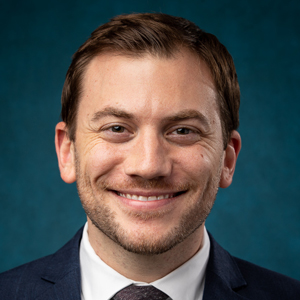 David Puretz teaches first-year writing and advanced writing classes at Yeshiva College. He recently became the editorial director at Global City, a publishing collective started by Linsey Abrams in the early 1990s that for the past 25 years has published the literary and cultural journal Global City Review and a growing list of other books and anthologies.
Prior to this, he had been the managing editor overseeing the digital launch of the journal and the publication of the newest online and print journal issue, Legacies.
“Global City Review is a biannual online and print publication, and each issue is organized around a broad theme and includes stories, poems, memoirs, interviews, essays and artwork,” he explained. “Issue 24, which we have slated for April 2020, will be titled ‘Setting the Record Straight,’ and Issue 25, for the end of 2020, will be ‘Do We Have a Future?’ Running the Review has been such a labor of love.”
David Puretz teaches first-year writing and advanced writing classes at Yeshiva College. He recently became the editorial director at Global City, a publishing collective started by Linsey Abrams in the early 1990s that for the past 25 years has published the literary and cultural journal Global City Review and a growing list of other books and anthologies.
Prior to this, he had been the managing editor overseeing the digital launch of the journal and the publication of the newest online and print journal issue, Legacies.
“Global City Review is a biannual online and print publication, and each issue is organized around a broad theme and includes stories, poems, memoirs, interviews, essays and artwork,” he explained. “Issue 24, which we have slated for April 2020, will be titled ‘Setting the Record Straight,’ and Issue 25, for the end of 2020, will be ‘Do We Have a Future?’ Running the Review has been such a labor of love.”
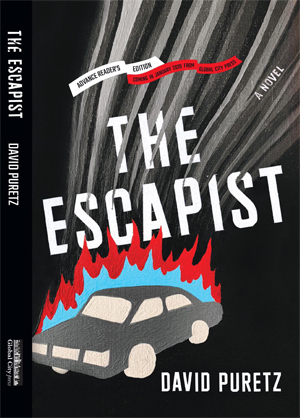 “My novel, The Escapist, is releasing on January 28, 2020, through Global City,” he said. “The marketing campaign for the book involves outreach to national and local media, national consumer and trade advertising, social media buzz and a Bookstagram campaign, author radio and podcast interviews, author readings in select U.S. cities and promotion at independent and small press book fairs.
“I had considered pursuing a more mainstream publisher, but I couldn't pass on the opportunity to have the brilliant Linsey Abrams as my editor on this one, and I was really attracted to the freedom that comes with doing a book with a small press. I feel that the book, with this collective, and with my own publishing knowledge (I worked at HarperCollins for many years), may fare just fine.”
Back to the top
“My novel, The Escapist, is releasing on January 28, 2020, through Global City,” he said. “The marketing campaign for the book involves outreach to national and local media, national consumer and trade advertising, social media buzz and a Bookstagram campaign, author radio and podcast interviews, author readings in select U.S. cities and promotion at independent and small press book fairs.
“I had considered pursuing a more mainstream publisher, but I couldn't pass on the opportunity to have the brilliant Linsey Abrams as my editor on this one, and I was really attracted to the freedom that comes with doing a book with a small press. I feel that the book, with this collective, and with my own publishing knowledge (I worked at HarperCollins for many years), may fare just fine.”
Back to the top
Dr. Linda Shires Illustrates Her Love of Image and Text
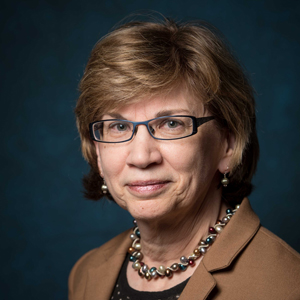 On Oct. 5, 2019, Dr. Linda Shires, David and Ruth Gottesman Professor of English Chair, Stern College for Women and division head for humanities, lectured at an invitation-only symposium at Princeton University, “A Single Drop of Ink for a Mirror: A Symposium on Nineteenth-Century Literature and the Visual Arts.”
The topic of her lecture, “Image > < Text: Kipling’s Just So Stories,” is part of a chapter in a book on which she is working on self-illustrated texts of the Long Nineteenth Century.
“The Long Nineteenth Century is a term coined by British historian Eric Hobsbawm and Russian Literary critic Ilya Ehrenburg,” said Dr. Shires. “It refers to a progression of ideas put forth in the period from 1789 to 1914, beginning with the French Revolution and ending with World War I, ideas that shaped the nineteenth century.”
The relationship of image and text has always interested her. Her last single-authored book, Modes of Viewing and Knowing in Nineteenth-Century England, treated the issue of optics and perspective in literature and art of the period.
“Illustration is a standard element of 19th-century British periodicals, fiction and poetry, due to the rise of print technologies, literacy and a middle class that could afford books and magazines,” she observed. “The demand for illustrated books was very high, so printers and artists developed new techniques for mass production as the century continued.” For example, Charles Dickens worked with illustrators such as George Cruikshank for his serialized novels, and some artist-writers, such as Dante Gabriel Rossetti, paired their own poems with paintings in what has been called “double art.”
“The ‘self-illustrated’ part of self-illustrated texts refers to those writers who were also illustrators and who, in one or more key literary accomplishments, provided their own illustrations, such as William Blake, William Makepeace Thackeray, Rudyard Kipling, Thomas Hardy and Beatrix Potter, or those who sketched their own illustrations first and then worked with another illustrator for print copy, such as Lewis Carroll or Christina Rossetti.”
This interests her because “the relationships between image and text in these composite works are from a single imagination. The images do not just ‘represent’ something in a text but work organically in multiple ways and on multiple symbolic and literal levels to convey a complex set of meanings.”
Back to the top
On Oct. 5, 2019, Dr. Linda Shires, David and Ruth Gottesman Professor of English Chair, Stern College for Women and division head for humanities, lectured at an invitation-only symposium at Princeton University, “A Single Drop of Ink for a Mirror: A Symposium on Nineteenth-Century Literature and the Visual Arts.”
The topic of her lecture, “Image > < Text: Kipling’s Just So Stories,” is part of a chapter in a book on which she is working on self-illustrated texts of the Long Nineteenth Century.
“The Long Nineteenth Century is a term coined by British historian Eric Hobsbawm and Russian Literary critic Ilya Ehrenburg,” said Dr. Shires. “It refers to a progression of ideas put forth in the period from 1789 to 1914, beginning with the French Revolution and ending with World War I, ideas that shaped the nineteenth century.”
The relationship of image and text has always interested her. Her last single-authored book, Modes of Viewing and Knowing in Nineteenth-Century England, treated the issue of optics and perspective in literature and art of the period.
“Illustration is a standard element of 19th-century British periodicals, fiction and poetry, due to the rise of print technologies, literacy and a middle class that could afford books and magazines,” she observed. “The demand for illustrated books was very high, so printers and artists developed new techniques for mass production as the century continued.” For example, Charles Dickens worked with illustrators such as George Cruikshank for his serialized novels, and some artist-writers, such as Dante Gabriel Rossetti, paired their own poems with paintings in what has been called “double art.”
“The ‘self-illustrated’ part of self-illustrated texts refers to those writers who were also illustrators and who, in one or more key literary accomplishments, provided their own illustrations, such as William Blake, William Makepeace Thackeray, Rudyard Kipling, Thomas Hardy and Beatrix Potter, or those who sketched their own illustrations first and then worked with another illustrator for print copy, such as Lewis Carroll or Christina Rossetti.”
This interests her because “the relationships between image and text in these composite works are from a single imagination. The images do not just ‘represent’ something in a text but work organically in multiple ways and on multiple symbolic and literal levels to convey a complex set of meanings.”
Back to the top
Dr. Edward Belbruno is Painting the Way to the Moon
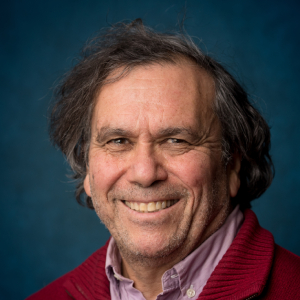 Dr. Edward Belbruno
Dr. Beliavsky’s Documentary on David Del Tredici is Making the Rounds
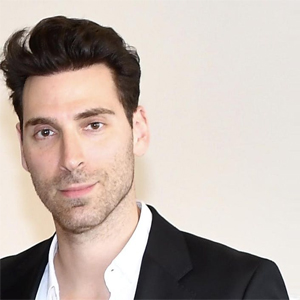 In addition to being the chair of the Department of Fine Art and Music at Yeshiva College, Dr. Daniel Beliavsky is also an associate professor, concert pianist, music theorist, composer, and filmmaker.
In that last capacity, as filmmaker, Dr. Beliavsky has been garnering many positive notices for Secret Music, his documentary about the Pulitzer Prize-winning American composer David Del Tredici. In 2018, it was screened at the Mostly Modern Music Festival in Saratoga Springs, New York, and this year, Secret Music has made the rounds at the Leslie-Lehman Museum in New York City; the Wisconsin Film Festival in Madison, Wisconsin; the American Music Festival in Troy, New York; and QFest Film Festival in Houston, Texas.
On October 12, 2019, audiences can see the film at the Lonely Seal International Film Festival at the Regent Theatre in Arlington-Boston, Massachusetts. Earlier that day, Dr. Beliavsky will perform a repertoire of Romantic era music as well as music by Del Tredici at Steinert Hall in Boston. At the Q&A following the festival showing at 5 p.m., he will play more of Del Tredici’s music.
Secret Music is his second foray into music documentaries. In 2011, Dr. Beliavsky’s production company, Opus1films, released Sonata (1957), a film about the distinguished American composer Donald Harris’s Piano Sonata Op. 1 and his early career in Paris. That film was shown at Lincoln Center in New York City and was broadcast on public television.
Back to the top
In addition to being the chair of the Department of Fine Art and Music at Yeshiva College, Dr. Daniel Beliavsky is also an associate professor, concert pianist, music theorist, composer, and filmmaker.
In that last capacity, as filmmaker, Dr. Beliavsky has been garnering many positive notices for Secret Music, his documentary about the Pulitzer Prize-winning American composer David Del Tredici. In 2018, it was screened at the Mostly Modern Music Festival in Saratoga Springs, New York, and this year, Secret Music has made the rounds at the Leslie-Lehman Museum in New York City; the Wisconsin Film Festival in Madison, Wisconsin; the American Music Festival in Troy, New York; and QFest Film Festival in Houston, Texas.
On October 12, 2019, audiences can see the film at the Lonely Seal International Film Festival at the Regent Theatre in Arlington-Boston, Massachusetts. Earlier that day, Dr. Beliavsky will perform a repertoire of Romantic era music as well as music by Del Tredici at Steinert Hall in Boston. At the Q&A following the festival showing at 5 p.m., he will play more of Del Tredici’s music.
Secret Music is his second foray into music documentaries. In 2011, Dr. Beliavsky’s production company, Opus1films, released Sonata (1957), a film about the distinguished American composer Donald Harris’s Piano Sonata Op. 1 and his early career in Paris. That film was shown at Lincoln Center in New York City and was broadcast on public television.
Back to the top
Dr. Jannine Lasaleta Explores How Nostalgia Affects Consumer Behavior
Dr. Jannine Lasaleta, assistant professor at the Sy Syms School of Business, received her PhD from the University of Minnesota. Her master’s degree is from York University, and her bachelor’s degree is from the University of British Columbia. Her business and research expertise focuses on how nostalgia affects consumer attitudes, behaviors, and choices across varying contexts, such as politics and health. She also examines the motivation for money, product choice, and hedonic consumption. Her research has been published in Journal of Consumer Research, Journal of Marketing Research, Personality and Social Psychology Bulletin, and Food and Quality Preference, and has been featured in multiple media outlets such as BBC, CNN, Fortune, Huffington Post, NBC’s Today Show and Fast Company. She recently was quoted in Harper’s Bazaar about the reunion of the Jonas Brothers. The interview with YU News has been edited for length and content.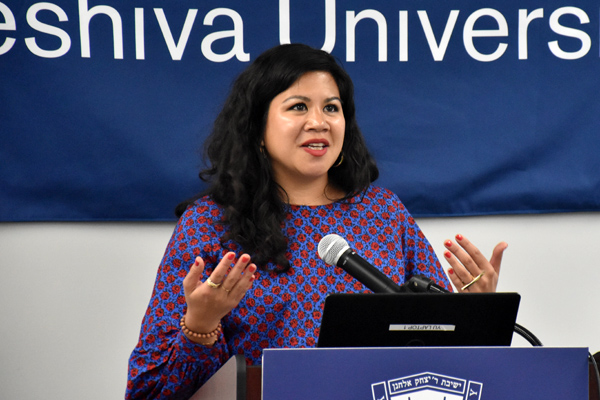 Dr. Jannine Lasaleta
Dr. Lisa Chalik Investigates the Social World of Children
Dr. Lisa Chalik is an assistant professor of psychology at Stern College for Women. She received both her master’s degree and doctorate from New York University and her bachelor’s degree from Rutgers University. She is the director of the Developing Minds Lab at Stern College, where her research focuses on the theories that children build and rely upon as they navigate the social world. She explores how children learn to organize the people around them into social categories and how they make inferences about people based on social category membership. She also studies the implications of social categorization for moral evaluation. The interview with YU News has been edited for length and content.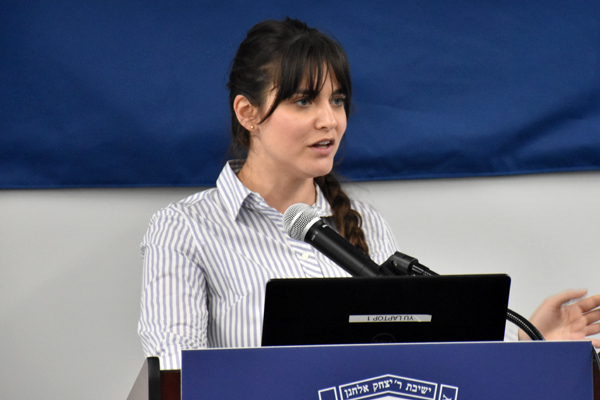 Have you always had an interesting in psychology?
As an undergrad at Rutgers, I majored in psychology because I thought it was interesting, and I just never stopped. I found myself applying to graduate schools, found an adviser whom I really wanted to work with at New York University, did a post-doc at Yale with two amazing professors and then started applying for jobs.
How have you found being at YU?
I love the students. They’re phenomenal, and working with them has been the best part of the job. I am also Orthodox, and coming in to an Orthodox Jewish institution, I assumed I was going to be meeting one kind of person. But I’m surprised by the diversity of voices and perspectives in the students, which has made it very interesting to interact with them about psychology and all sorts of other things. There is more religious diversity than I expected as well as just general outlooks on the world.
What was the genesis of the Developing Minds Lab?
I’m trained as a researcher, and when I came to interview for my position, it was with the understanding that I would be both teaching and doing research. The dean and members of the psychology department wanted an increased focus on research to help students acquire the experience they needed to go to graduate school in psychology. There was this opportunity, then, for us to create this research lab on campus.
It’s good for me because I get to continue doing the research I love and for the students because they get to work with me and get research experience. I’ve had about 12 students come through the Lab so far. They’re participating in every part of the research process, from reading the literature and discussing it to coming up with interesting research questions and ways to test those questions. They help me both design and run the studies. We have a field site at the Liberty Science Center in Jersey City [New Jersey], where three or four students go there once a week to interact with the families. They collect the data for the studies that we’re running but also just interact with people and teach people about psychological science in general.
This summer, we were also collecting data in Central Park. We set up a station in random spots in the park to do the same thing: interact with families, collect data and teach people about science and psychology and then, later, analyze the data together. It worked really well and was a lot of fun. The Lab has only been in operation for a little over a year, but soon, we’ll start publishing the data that we’ve collected.
How has the response been from students about the Lab?
The response from the students has been really positive. In fact, I’ve had to turn down a few students who wanted to join the Lab just so that I can manage the ones I have. A group of them have told me that they thought research would be boring, but they’ve found that it’s actually really interesting! It’s also a good opportunity for those who want to go to grad school in psychology to start honing their interests, and they’ve told me that they now feel much more prepared to move forward.
You describe the focus of your research as being about children and the “social world.” How do you define that term?
It’s true that there are many, many ways, especially with technology, that you could define a social world. What we’re looking at, on a very basic level, is what do children think it means to be part of a social group. So, if you learn that somebody’s a member of a certain group, what sorts of inferences do you make about them? If you know that two people are members of the same group, do you expect them to have a certain sort of relationship with each other? Are there certain ways that you expect people to act towards in-group and out-group members?
The studies we do are designed to feel like games. We will tell them a little story and ask them to predict what they think is going to happen next, or to explain why something happened, or to say whom they liked best in the story. So, it’s always very simple, because we always want to be able to test what children think about the world regardless of their verbal abilities. Any pre-school child should have the requisite abilities to interact with us.
The age range that we work with—between the ages of three and 10—seems to be a really important time when children develop beliefs about social groups. So, we see also sorts of interesting changes, depending on the children’s cultural communities, their backgrounds, what sort of schools they go to, with whom they spend their time. There are all sorts of differences in how children choose to divide up the social world, in what they notice and think are meaningful as well as the behavioral expectations that children have about how people are going to act with each other and how people are supposed to act toward each other.
What’s on the horizon for you?
I was given a start-up grant for the first three years, and I’m also now starting to write grants to support the Lab. There will be parts of the grant with which students can help, and they’re definitely helping me write papers and do conference presentations. With more funding secured, I can expand operations so that we can do more research, and students can begin the process of publishing their research.
When I was applying for jobs, of course I wanted to become a psychology professor. But being a professor at Stern College has this whole extra added appeal because I have the sense that I’m contributing to the Jewish community, which is very rewarding to me.
Back to the top
Have you always had an interesting in psychology?
As an undergrad at Rutgers, I majored in psychology because I thought it was interesting, and I just never stopped. I found myself applying to graduate schools, found an adviser whom I really wanted to work with at New York University, did a post-doc at Yale with two amazing professors and then started applying for jobs.
How have you found being at YU?
I love the students. They’re phenomenal, and working with them has been the best part of the job. I am also Orthodox, and coming in to an Orthodox Jewish institution, I assumed I was going to be meeting one kind of person. But I’m surprised by the diversity of voices and perspectives in the students, which has made it very interesting to interact with them about psychology and all sorts of other things. There is more religious diversity than I expected as well as just general outlooks on the world.
What was the genesis of the Developing Minds Lab?
I’m trained as a researcher, and when I came to interview for my position, it was with the understanding that I would be both teaching and doing research. The dean and members of the psychology department wanted an increased focus on research to help students acquire the experience they needed to go to graduate school in psychology. There was this opportunity, then, for us to create this research lab on campus.
It’s good for me because I get to continue doing the research I love and for the students because they get to work with me and get research experience. I’ve had about 12 students come through the Lab so far. They’re participating in every part of the research process, from reading the literature and discussing it to coming up with interesting research questions and ways to test those questions. They help me both design and run the studies. We have a field site at the Liberty Science Center in Jersey City [New Jersey], where three or four students go there once a week to interact with the families. They collect the data for the studies that we’re running but also just interact with people and teach people about psychological science in general.
This summer, we were also collecting data in Central Park. We set up a station in random spots in the park to do the same thing: interact with families, collect data and teach people about science and psychology and then, later, analyze the data together. It worked really well and was a lot of fun. The Lab has only been in operation for a little over a year, but soon, we’ll start publishing the data that we’ve collected.
How has the response been from students about the Lab?
The response from the students has been really positive. In fact, I’ve had to turn down a few students who wanted to join the Lab just so that I can manage the ones I have. A group of them have told me that they thought research would be boring, but they’ve found that it’s actually really interesting! It’s also a good opportunity for those who want to go to grad school in psychology to start honing their interests, and they’ve told me that they now feel much more prepared to move forward.
You describe the focus of your research as being about children and the “social world.” How do you define that term?
It’s true that there are many, many ways, especially with technology, that you could define a social world. What we’re looking at, on a very basic level, is what do children think it means to be part of a social group. So, if you learn that somebody’s a member of a certain group, what sorts of inferences do you make about them? If you know that two people are members of the same group, do you expect them to have a certain sort of relationship with each other? Are there certain ways that you expect people to act towards in-group and out-group members?
The studies we do are designed to feel like games. We will tell them a little story and ask them to predict what they think is going to happen next, or to explain why something happened, or to say whom they liked best in the story. So, it’s always very simple, because we always want to be able to test what children think about the world regardless of their verbal abilities. Any pre-school child should have the requisite abilities to interact with us.
The age range that we work with—between the ages of three and 10—seems to be a really important time when children develop beliefs about social groups. So, we see also sorts of interesting changes, depending on the children’s cultural communities, their backgrounds, what sort of schools they go to, with whom they spend their time. There are all sorts of differences in how children choose to divide up the social world, in what they notice and think are meaningful as well as the behavioral expectations that children have about how people are going to act with each other and how people are supposed to act toward each other.
What’s on the horizon for you?
I was given a start-up grant for the first three years, and I’m also now starting to write grants to support the Lab. There will be parts of the grant with which students can help, and they’re definitely helping me write papers and do conference presentations. With more funding secured, I can expand operations so that we can do more research, and students can begin the process of publishing their research.
When I was applying for jobs, of course I wanted to become a psychology professor. But being a professor at Stern College has this whole extra added appeal because I have the sense that I’m contributing to the Jewish community, which is very rewarding to me.
Back to the top
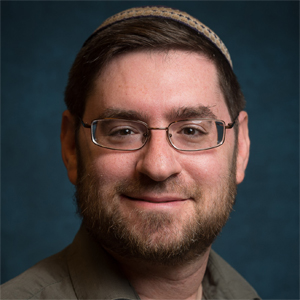 Dr. Joshua Waxman, assistant professor at Stern College for Women, presented a peer-reviewed short paper titled “A Graph Database of Scholastic Relationships in the Babylonian Talmud” at the 2019 Digital Humanities Conference held July 9-12, 2019, in Utrecht, the Netherlands.In his presentation, Dr. Waxman noted that “with the rise of the Internet, it has been pointed out that the Babylonian Talmud, with layers of texts commenting and referring to other texts, was an ancient hyper-text. Now, with the rise of social media, we can start to think of the Talmud as an ancient social network…and we set out to create a social network graph of the Babylonian Talmud.” Using Named Entity Recognition of a statement-aligned Aramaic/English bitext, “we found nodes (rabbis) and edges (scholastic interactions, such as citation). We induced formal scholastic relationships from these interactions, and propagated biographical information across the graph. We highlighted rabbis in the Talmudic text, using color to indicate scholastic generation, and displayed relevant subgraphs to show how the participants on a folio relate to one another both locally and globally.”Dr. Waxman believes that “this biographical and scholastic information can aid a student of Talmud in understanding the dynamics of the discourse and why specific rabbis say what they say. For instance, the modern Revadim approach to Talmud study makes great use of which generation a Tanna or Amora lived, which academy he belonged to, and so on.”In February 2019, Dr. Waxman contributed to a YU Ideas symposium on “The Future of the Book,” in which he described some of the early stages of this work. “But there have been various advances in the system,” he explained. “We now have coverage of the entire Babylonian Talmud; we segment the text and associated scholastic graphs not just into pages but into sugyot [topical passages]; we are exploring co-occurrence of scholars in various sugyot to find further relationships; and are experimenting with algorithmic methods of scholar disambiguation, because the same name can refer to different people who lived in different times (such as five different people named Rav Kahana, two people named Ravina, and so on). I’m hoping to publish something about these algorithms/advanced some time in the future.”
YU students assisted Dr. Waxman in the development of this system. Shayna Fishman ’18S worked to put together the first version of the system, first as funded summer research, then continuing on as her honors thesis under Dr. Waxman’s mentorship. Subsequently, Shira Smith ’19S worked on the project as her honors thesis, looking at the co-occurrences within sugyot to try to figure out scholastic relationships.
Dr. Waxman’s current research is centered on natural language processing, digital humanities and social network graphs. “It also has a Torah UMadda orientation,” he noted, “where several projects try to develop or harness algorithms to discover things about Jewish texts.”
He just returned from the ISCOL (Israeli Seminar on Computational Linguistics) 2019, held on September 11, 2019, in Haifa, Israel, where four submissions had been accepted for poster presentations:
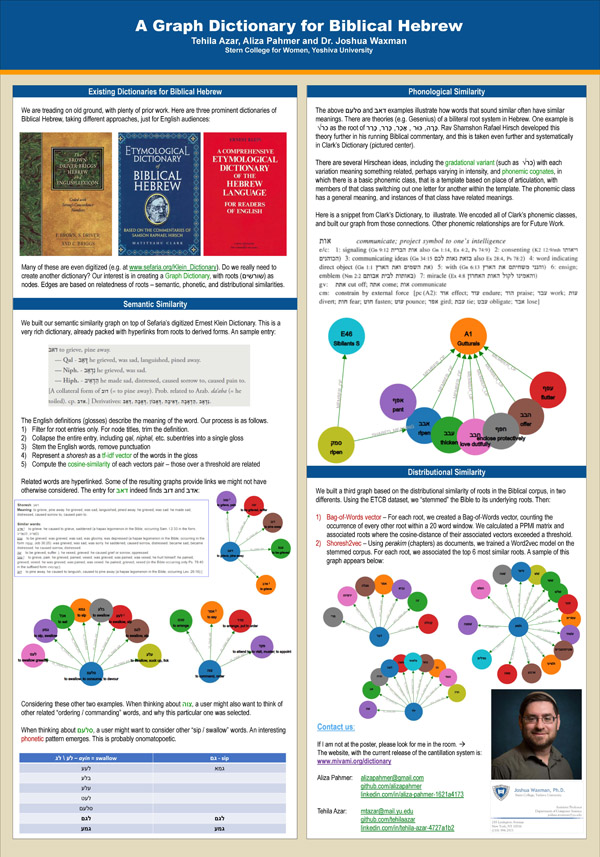
Miriam Azar, Aliza Pahmer and Joshua Waxman – A Graph Dictionary for Biblical Hebrew
We built a graph dictionary for Biblical Hebrew, with roots as nodes and relationships as edges. The relationships were based on semantic, phonological and distributional similarity. There is a website for this.
Dr. Joshua Waxman, assistant professor at Stern College for Women, presented a peer-reviewed short paper titled “A Graph Database of Scholastic Relationships in the Babylonian Talmud” at the 2019 Digital Humanities Conference held July 9-12, 2019, in Utrecht, the Netherlands.In his presentation, Dr. Waxman noted that “with the rise of the Internet, it has been pointed out that the Babylonian Talmud, with layers of texts commenting and referring to other texts, was an ancient hyper-text. Now, with the rise of social media, we can start to think of the Talmud as an ancient social network…and we set out to create a social network graph of the Babylonian Talmud.” Using Named Entity Recognition of a statement-aligned Aramaic/English bitext, “we found nodes (rabbis) and edges (scholastic interactions, such as citation). We induced formal scholastic relationships from these interactions, and propagated biographical information across the graph. We highlighted rabbis in the Talmudic text, using color to indicate scholastic generation, and displayed relevant subgraphs to show how the participants on a folio relate to one another both locally and globally.”Dr. Waxman believes that “this biographical and scholastic information can aid a student of Talmud in understanding the dynamics of the discourse and why specific rabbis say what they say. For instance, the modern Revadim approach to Talmud study makes great use of which generation a Tanna or Amora lived, which academy he belonged to, and so on.”In February 2019, Dr. Waxman contributed to a YU Ideas symposium on “The Future of the Book,” in which he described some of the early stages of this work. “But there have been various advances in the system,” he explained. “We now have coverage of the entire Babylonian Talmud; we segment the text and associated scholastic graphs not just into pages but into sugyot [topical passages]; we are exploring co-occurrence of scholars in various sugyot to find further relationships; and are experimenting with algorithmic methods of scholar disambiguation, because the same name can refer to different people who lived in different times (such as five different people named Rav Kahana, two people named Ravina, and so on). I’m hoping to publish something about these algorithms/advanced some time in the future.”
YU students assisted Dr. Waxman in the development of this system. Shayna Fishman ’18S worked to put together the first version of the system, first as funded summer research, then continuing on as her honors thesis under Dr. Waxman’s mentorship. Subsequently, Shira Smith ’19S worked on the project as her honors thesis, looking at the co-occurrences within sugyot to try to figure out scholastic relationships.
Dr. Waxman’s current research is centered on natural language processing, digital humanities and social network graphs. “It also has a Torah UMadda orientation,” he noted, “where several projects try to develop or harness algorithms to discover things about Jewish texts.”
He just returned from the ISCOL (Israeli Seminar on Computational Linguistics) 2019, held on September 11, 2019, in Haifa, Israel, where four submissions had been accepted for poster presentations:
Miriam Azar, Aliza Pahmer and Joshua Waxman – A Graph Dictionary for Biblical Hebrew
We built a graph dictionary for Biblical Hebrew, with roots as nodes and relationships as edges. The relationships were based on semantic, phonological and distributional similarity. There is a website for this.
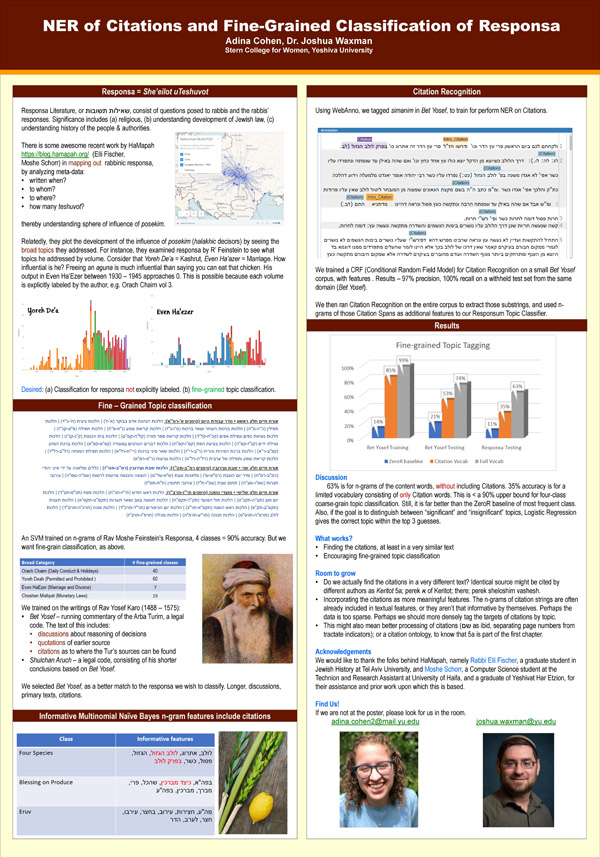
 Adina Cohen ’19S and Joshua Waxman – NER of Citations and Fine-Grained Classification of Responsa
We looked at rabbinic responsa [she’elot uteshuvot] and tried to classify their topic based on the Hebrew/Aramaic words that appear as well as based on the citations of earlier sources that occur. This was Adina’s Cohen’s honors thesis, which Dr. Waxman mentored, and Adina, who has recently made aliyah, was at the conference to present her poster.
Adina Cohen ’19S and Joshua Waxman – NER of Citations and Fine-Grained Classification of Responsa
We looked at rabbinic responsa [she’elot uteshuvot] and tried to classify their topic based on the Hebrew/Aramaic words that appear as well as based on the citations of earlier sources that occur. This was Adina’s Cohen’s honors thesis, which Dr. Waxman mentored, and Adina, who has recently made aliyah, was at the conference to present her poster.
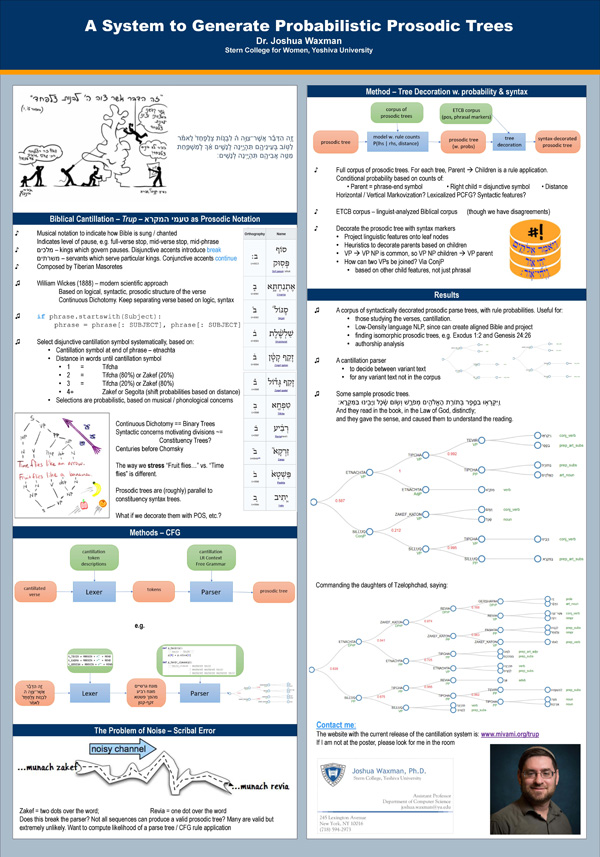
 Joshua Waxman – A System to Generate Probabilistic Prosodic Trees
This is a system to interpret and make meaningful the cantillation of the Bible. Besides being musical notation, the cantillation actually describes a binary prosodic tree. There is a website for this.
Joshua Waxman – A System to Generate Probabilistic Prosodic Trees
This is a system to interpret and make meaningful the cantillation of the Bible. Besides being musical notation, the cantillation actually describes a binary prosodic tree. There is a website for this.
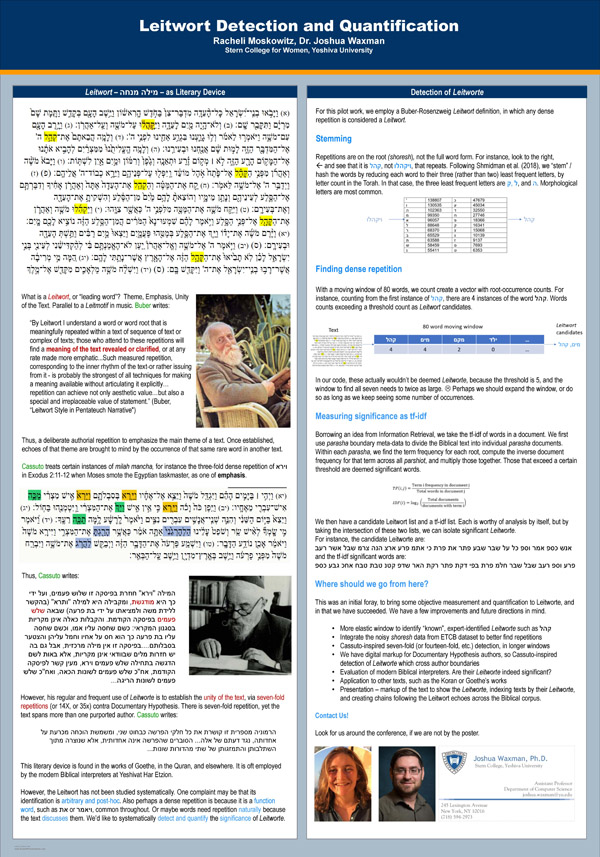
 Racheli Moskowitz ’19S and Joshua Waxman – Leitwort Detection and Quantification
A Leitwort [leading word], known in Hebrew as Milah Mancha and quite popular at Yeshivat Har Etzion, is a word or phrase repeated, often 3 or 7 times, densely in a passage. This work systematically finds such Leitworts and quantifies their significance. This was Racheli Moskowitz’s honor’s thesis, which Dr. Waxman mentored.
Racheli Moskowitz ’19S and Joshua Waxman – Leitwort Detection and Quantification
A Leitwort [leading word], known in Hebrew as Milah Mancha and quite popular at Yeshivat Har Etzion, is a word or phrase repeated, often 3 or 7 times, densely in a passage. This work systematically finds such Leitworts and quantifies their significance. This was Racheli Moskowitz’s honor’s thesis, which Dr. Waxman mentored.