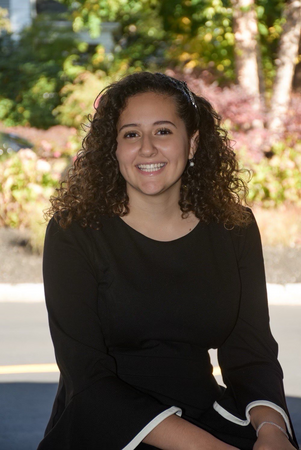
In Summer 2025, the Impact Office at the Zahava and Moshael J. Straus Center for Torah and Western Thought provided grants to several students with internships in the political arena, fostering a new generation of leaders dedicated to both public service and Jewish values. The Impact Office recently sat down with Talya Naggar (SCW ’27), a Scholar at Senator Joseph Lieberman–Mitzner Center for Public Service and Advocacy, to discuss her summer internship in the D.C. office of Congressman Randy Fine. She reflects on her work establishing a new congressional office, engaging with constituents and contributing to research on antisemitism and policy issues, and how this connects to her aspirations in public service.
What were your main responsibilities during your time on Capitol Hill?
Freshman year of Congress is, in many ways, comparable to the first day of school. What few realize is that there is no guidebook for a new member—especially for those entering via a special election. Newly elected members join their class months later than their peers, often while still campaigning or fundraising, and must quickly catch up.
In April 2025, Florida State Senator Randy Fine won a special election for Florida’s 6th Congressional District. I began my internship in early June, joining a brand-new office still finding its footing. My responsibilities spanned many typical intern tasks: supporting constituent relations by answering phones and drafting correspondence, assisting with press and communications through social media and the office newsletter, and managing operational logistics such as preparing the office for visitors and organizing Capitol tours. I personally led more than forty tours of the Capitol.
Because the office was newly established, I also took on additional tasks to help set it up: preparing rooms for painting, organizing layouts, bringing in artwork from the Florida House, reorganizing the office’s Capitol storage, and assisting with the website launch. I frequently consulted the Capitol information desk to clarify protocol and ran supply errands to ensure smooth office operations.
This internship offered a window not only into the daily work of a congressional office but also into the effort required to build one from the ground up. I saw firsthand the importance of teamwork, flexibility, and stepping in wherever help was needed.
What issues or projects did you focus on most closely?
While I engaged in a wide range of congressional office work, much of my research focused on antisemitism. Since Congressman Fine is Jewish and serves on the Education and Workforce Committee, I gathered data related to antisemitism in higher education and the workplace, supporting both hearings with university presidents and press responses.
When the Congressman joined the Foreign Affairs Committee, I contributed to preparing the office for work on international issues, particularly concerning Israel and antisemitism. This involved tracking relevant developments, engaging with interest groups, and building research foundations for the office’s new initiatives.
Another key part of my role was constituent relations. I frequently handled calls, many involving instances of hate or antisemitism, and learned to navigate them with patience, professionalism and empathy. Beyond listening, I directed constituents to appropriate resources and ensured their concerns were acknowledged.
Which skills did you improve or develop?
This internship strengthened both professional and interpersonal skills. Handling constituent relations taught me how to remain composed in challenging situations and how to guide callers toward constructive solutions. Leading Capitol tours honed my ability to connect with diverse audiences, from families with small children to elderly visitors, adapting each experience to their needs.
I also expanded my operational and research skills, becoming fluent in internal office data systems, managing logistical tasks and conducting policy research to support the Congressman’s priorities. In addition, I gained exposure to communications, including monitoring press coverage, assisting with social media and contributing to press releases.
What were some key lessons that you learned from the experience?
One of the most important lessons I learned was the value of a strong, cohesive team. Congressman Fine was able to make a rapid impact in Congress thanks to a committed team, from the chief of staff down to interns. At the time of the vote on the One Big Beautiful Bill Act, the congressman, along with the chief of staff and legislative director, were literally sleeping in the office. The intensity of the environment—shifting schedules, world leaders passing through and long hours—underscored the importance of teamwork and adaptability.
At the same time, juggling multiple responsibilities simultaneously, such as phone calls, press work, constituent visits and ad hoc tasks, was challenging. Learning to prioritize and remain focused under constant pressure was one of the most valuable aspects of the experience.
Why does this kind of work matter to you, and what would you say to other students considering a similar path?
I believe this work is vital because it demonstrates the tangible impact of public service. Working in a congressional office provides insight into how the institution functions daily, from committee hearings to constituent interactions. What I came to realize is that even the smallest moments can matter. A phone call with a constituent, a passing conversation with a staffer or even a discussion with another intern can carry weight. Many of the people you meet in these settings will go on to become decision makers in Washington and beyond, which makes it essential to stand by your beliefs and engage thoughtfully.
For students, such experiences highlight the importance of ensuring that every constituent’s voice is heard and of bringing one’s own perspective into the work. Internships like this not only offer a chance to serve but also deepen understanding of the political system—a foundation for those aspiring to future roles in public service. For me, G-d willing, this internship is the first step toward a career in public service, preparing me to engage meaningfully in policy and governance while supporting issues central to the Straus Center’s mission. It really means so much to have had the support of the Straus Center; I am very grateful.
Subscribe to the Straus Center newsletter to stay up to date on the latest Straus Center events, publications and news. Click here to sign up.
To learn more about the Straus Center, click here. And be sure to like the Straus Center on Facebook, follow us on Twitter and Instagram, and connect with us on LinkedIn.