Apr 27, 2021 By: yunews
In 2020, OU Press and Koren Publishers issued a very unique book written by Rabbi Dr. Benjy Leibowitz ’05YUHS, ’10YC, ’12A, ’13R and Michael Adler ’10YC: the Koren Yachad Siddur, one of the first, if not the first, siddur authored to meet the spiritual needs of those with developmental challenges.
The idea for the book came out of work they were doing for YACHAD, The National Jewish Council for Disabilities. “Michael was overseeing programming for the older division of New York Yachad,” said Leibowitz, “and I was overseeing programming in some of the Yachad chapters outside of the New York area (Dallas, Houston, Detroit, Cleveland and Columbus) as well as directing Morasha Yachad.”
“There was a Yachad member with special needs, Jacob Gross, in Detroit who was very connected to davening but due to his challenges was still using a children’s siddur because there was nothing on the market appropriate for him,” explained Adler. As Jacob approached his bar mitzvah, he and his family asked Leibowitz and Adler if Yachad might be interested in creating a siddur that would meet the needs of Jacob and people like him.
“We loved the idea,” said Leibowitz, “and I immediately walked into Dr. Jeff Lichtman's office, the international director of Yachad at the time, and without much convincing he said he loved the idea as well.” That day, Adler and Leibowitz started brainstorming ideas and planning the project.
“We had to take some time to find our voice and initially worked with a larger team to narrow down how we would go about this project, ensuring that it would be meaningful for the special needs community while still containing all content of a typical siddur,” explained Adler. “Once we got the concept solidified, Benjy and I worked very closely with the team at OU Press who guided us and interfaced with Koren Publishers since neither of us had any experience in the publishing world.”
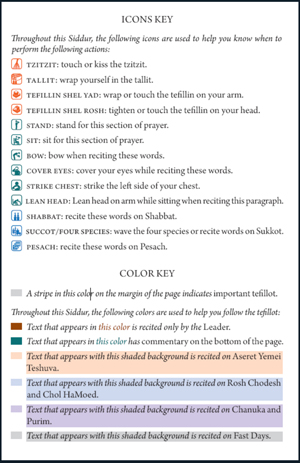
According to the publisher, the siddur “features easy-to-read conceptual English translation and commentary focused on fundamental concepts of tefilla that bring the text alive. Ease of navigation is enhanced by the prominent marking of critical sections of prayer, color coding of the commentary and responsive sections between the Leader and congregation, and insertion of icons to provide pictorial instruction of actions embedded in tefillah.”