Trip to Israel to Learn About Social Service System Includes Impromptu Education in Emergency Response to Gaza War
Feb 10, 2009 By: yunews
Feb 10, 2009 -- It was supposed to be a study program in Israel introducing students in the Certificate of Jewish Communal Service Program at Wurzweiler School of Social Work to the country’s social service system. But the ten-day seminar in Israel turned into a teachable experience in the role social workers play during times of war when fighting broke out in Gaza.
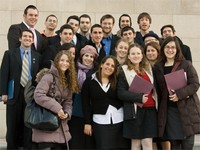
Four Wurzweiler students joined six other graduate students from Columbia and New York Universities on the intensive seminar in January, led by Lyn Light Geller of UJA-Federation and Dr. Saul Andron, professor and director of the Certificate Program.
They had originally lined up visits to Israeli social service and advocacy agencies and interactions with an array of clients, non-profit agency professionals and academic experts to explore the challenges Israel faces in delivering services to its most vulnerable and embattled populations. But as war broke out in the south, the students’ itinerary shifted to include special sessions with representatives of key agencies responding to the emergency needs facing the civilian population in the battle zone.
The students met with senior professionals of the Israel Trauma Coalition, a coordinating agency launched by the UJA-Federation of New York, which was actively engaged in mobilizing professional and volunteer assistance to the civilian population in the south. Other organizations with service centers in the south—such as Yididim, an organization for immigrant, at-risk children—implemented innovative and creative strategies to continue service to their various client groups.
The group also visited the Avi Chai Foundation facility in Jerusalem, which held a special day of fun activities and a concert with some of Israel’s top music stars for residents from the towns under attack.
“[The] children, parents and teachers were bussed to Jerusalem for one precious day to get away from the constant shell fire, the sheer terror and fear of being in a war zone to relax and enjoy, to smile, and to know they were not forsaken,” student Jeana Beneson wrote in an article on Wurzweiler’s Web site.
Seminar participants agreed that the trip brought home the horrors of war and constant conflict.
“Being in Israel during a time of great political unrest and seeing first hand the ways in which this young country mobilizes itself to take care of its people during a crisis is truly inspiring,” student Maureen Melcer said. “I walked away from the trip with new friends, colleagues and a renewed sense of pride for my work in the Jewish community."
The seminar also delved into the changing roles of the voluntary and government sectors in Israel, evolving models of relationships between Israel and Diaspora communities and the implications of declining philanthropic support from the Diaspora for human-service programs.
Students learned about service strategies to meet the needs of specific target groups in visits to the Jerusalem Battered Women’s Shelter; Jaffa Institute for underprivileged children; Amcha, a support center for Holocaust survivors; numerous programs for youth at risk; and absorption programs targeting young and adult Ethiopian immigrants.
Through meetings with veteran non-profit and Jewish community experts, the student group learned about the evolving not-for-profit sector in Israel, the changing dynamics of American and Israeli-based philanthropy and the growing privatization of human services delivery in Israel.
Wurzweiler Matt Dunn said, “As a result of the mission, I have a more well-rounded knowledge base regarding the social issues within Israeli society. Learning and interacting with other students in Israel is an experience that every student should have.”